
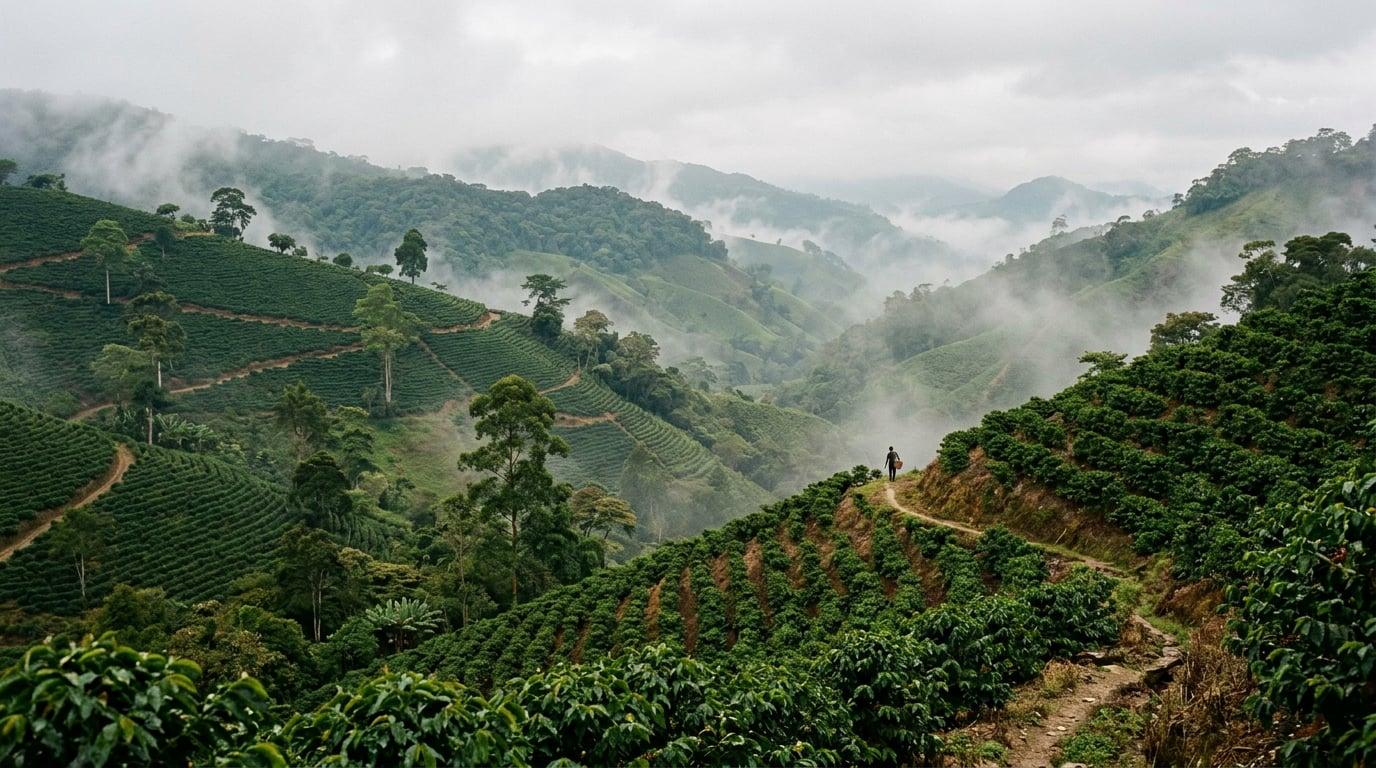
Northern Spain and Portugal lived decades where coffee, tobacco and flour crossed the Miño without fanfare — out of economic necessity, not romance. This archive documents that real human geography and connects it with the FLORAL profile of Colombian-origin coffee roasted by Contrabando in Barcelona.
Lote CTB-001
Serie archival · entrada atlántica
- Estado
- Activo
- Rareza
- Limitada
Tarjeta CTB-001: el lote viaja con código de archivo. Colección pensada para quien colecciona ritual, no postureo.
Ficha de archivo — zonas documentadas
- Pack
- Pack Atlántico
- Perfil de café
- FLORAL
- Zonas citadas
- Tui (ES) · Valença do Minho (PT) · Goián · Melgaço
The Miño: A Living Border Between Two Worlds
The Miño river forms a natural border between Galicia and northern Portugal for seventy-five kilometres. In its final stretch, from Frieira to its mouth at A Guarda, it defines a landscape of low banks, Ribeiro vineyards and villages that for centuries looked across the river as an extension of their own world rather than foreign territory. Galician and Portuguese are languages that understand each other without an interpreter; families crossed the river for weddings, markets and festivals with the same ease as moving between rooms. Linguists speak of a dialectal continuum; historians, of a single domestic economy divided by a political accident.
The international bridge between Tui and Valença, inaugurated in 1886 with wrought-iron structure designed by the Eiffel company and built by the Portuguese firm of Figueiredo, was the first fixed crossing after centuries of ford and ferryboat. Before that bridge, smugglers crossed at night in flat-bottomed boats — chalanas — that locals knew and fiscal guards could rarely intercept in the Atlantic fog. The crossing was not a heroic act: it was a daily necessity in a region where tariff asymmetries between the Spanish autarky and Salazar's Estado Novo made coffee, tobacco and textiles worth double or triple their value on the other bank.
During the Spanish autarky (1939–1959) and Portugal's Estado Novo, the Miño border was one of the most active informal crossing points in the Iberian Peninsula. Brazilian coffee — abundant and relatively cheap in Lisbon and Porto warehouses — reached Galicia through networks of smugglers who knew every bend in the river and every patrol schedule. The Arquivo Municipal de Vigo and Portuguese Guarda Fiscal records regularly document coffee seizures in the Valença do Minho, Goián and Tui area during the 1940s and 1950s.
Matuteras, Smugglers and the Economy of Silence
Miño smuggling was not organised by large criminal networks: it was a decentralised domestic economy in which each family contributed what it could. The so-called pasadores were well-known neighbours, not strangers. They knew when to cross, where to avoid the patrol and to whom to deliver the goods on the other side. The Spanish Civil Guard and the Portuguese Guarda Fiscal sometimes tolerated small volumes when the smuggler was a local and did not represent a declared threat to order.
Women played a decisive role that official history took decades to acknowledge. The matuteras crossed with coffee, tobacco and textiles under wide skirts, in wicker baskets with false bottoms or inside hollowed loaves of bread. In the village of Goián, the Tomiño municipal archive records from the 1940s repeatedly mention women as the main carriers of goods. They were not criminals by vocation: they were housewives supplementing the family income with what the legal market could not offer at accessible prices.
Coffee travelled in different forms depending on urgency: as green beans — lighter and less bulky — as roasted and ground coffee, or mixed with chicory to multiply the volume when the genuine article was scarce. The presence of chicory in coffee served in rural bars in Galicia and northern Portugal is not simply a matter of regional taste: it is the fossil trace of a scarcity economy that learned to stretch a valuable product.
From the Colombian Caribbean to the Iberian Atlantic
Colombia has been the leading world reference for washed soft-profile coffee for over a century. The regions of Antioquia, Huila, Nariño and the Sierra Nevada de Santa Marta produce specialty coffees purchased by specific lot at the leading roasteries of Europe. The Colombian differentiator over other origins is the consistency of wet processing: controlled washing with clean water, standardised fermentation and drying on African beds or under cover produce a green bean with bright acidity and a clean profile that the roaster can work with precision.
The Atlantic route of Colombian coffee is literal and verifiable: it leaves the Colombian Caribbean ports and crosses the Atlantic towards Rotterdam, Hamburg, Barcelona and Lisbon. The voyage takes ten to fourteen days; if humidity and temperature are controlled in the container, the bean arrives in optimal condition. Specialty lots are selected before shipment by cupping at destination and assigned to specific roasters to maintain traceability from farm to bag.
The FLORAL profile of CTB-001 captures the best of this Colombian Atlantic origin: notes of hibiscus, bergamot, yellow stone fruit and soft caramel that emerge in medium-light roast and express best in slow extraction methods — V60, Chemex, AeroPress in long filter mode or sixteen-hour cold brew. The same coast that saw coffee pass in wooden boats in the 1940s now receives specialty lots with full digital traceability from the farm of origin.
Brewing the Floral Profile: Water, Temperature and Method
The aromatic notes of the floral coffee — hibiscus, bergamot, yellow fruit — are volatile compounds that express best at water temperatures between 90 and 93 °C. Above that, the floral notes burn off and the coffee loses character; below, the extraction is flat and watery. One degree of difference in temperature produces clearly distinct results in the cup.
For ratio, 60 grams of coffee per litre of water is the standard starting point. With a V60, a spiral pour over three to three and a half minutes produces a clean cup with present but not aggressive acidity. If the coffee appears flat, increase the dose two or three grams and refine the grind one notch. If it appears bitter or astringent, raise the temperature one degree and open the grind slightly. Sixteen-hour cold brew with room-temperature water produces one of the purest expressions of the floral profile: soft, sweet and without the astringency that sometimes appears in hot extraction.
The Atlantic Pack was designed to explore this profile with different methods before committing to a monthly plan. If the floral profile already fits your taste, the monthly subscription maintains the same reference with automatic replenishment.
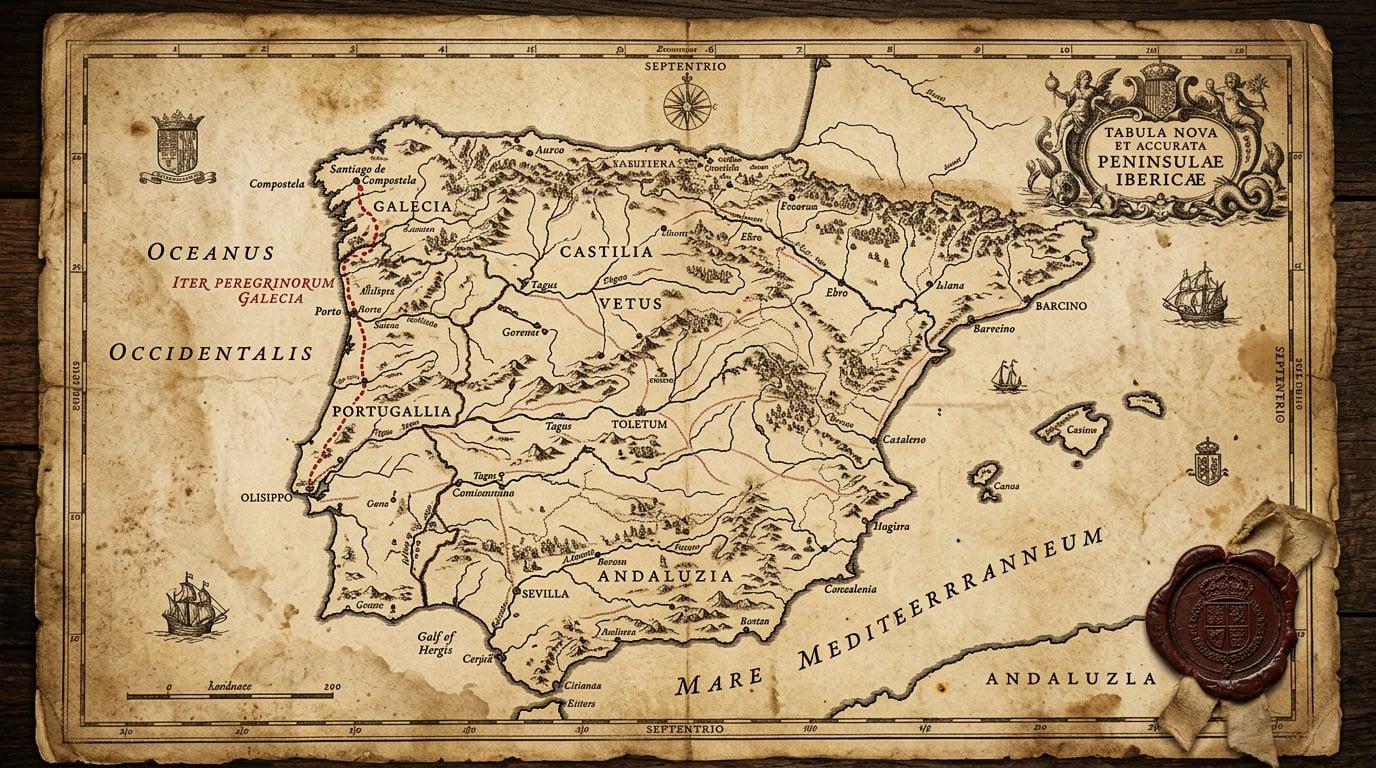
¿Cómo llegaba el café a esta ruta?
Colombian coffee reaches Europe via the Atlantic corridor: it leaves the Colombian Caribbean ports — Cartagena de Indias, Santa Marta, Barranquilla — and after ten to fourteen days at sea lands at Rotterdam, Lisbon or Barcelona depending on the buyer. For the northern Iberian strip, the Galician ports of Vigo and A Coruña, and Lisbon, were historically the most direct entry points to the north-western Iberian market.
Historically, coffee arriving via Lisbon to the Porto and Braga warehouses found its way to the Galician border through two channels: declared commerce, subject to high tariffs during the Spanish autarky period, and informal networks crossing the Miño at night. The records of the Portuguese Guarda Fiscal document regular coffee seizures in the Valença do Minho and Tui area during the 1940s and 1950s, demonstrating a constant and significant flow.
Today Contrabando's coffee follows the same Atlantic corridor with full traceability and a declared chain: it enters European ports with verified origin, is roasted in Barcelona and reaches the buyer directly without the intermediaries who adulterated goods in the clandestine networks of the last century.
El café colombiano llega a Europa por el corredor atlántico: sale de los puertos del Caribe colombiano —Cartagena de Indias, Santa Marta, Barranquilla— y tras diez a catorce días de travesía desembarca en Rotterdam, Lisboa o Barcelona según el destinatario. Para la franja norte de la Península, los puertos de Vigo, A Coruña y Lisboa eran los puntos de entrada más directos al mercado ibérico del noroeste.
Históricamente, el café que llegaba por Lisboa a los almacenes de Oporto y Braga encontraba su camino hacia la frontera gallega a través de dos canales: el comercio declarado, sujeto a aranceles elevados durante el período autárquico español, y las redes informales que cruzaban el Miño de noche. Los registros de la Guarda Fiscal portuguesa documentan decomisos regulares de café en Valença do Minho y Tui durante las décadas de 1940 y 1950, prueba de que el flujo era constante y significativo.
Hoy el café de Contrabando sigue el mismo corredor atlántico pero con trazabilidad completa y cadena declarada: entra por puertos europeos con origen verificado, se tuesta en Barcelona y llega directamente al comprador sin los intermediarios que adulteraban el género en las redes clandestinas del siglo pasado.
Preguntas frecuentes
- ¿Qué fue el contrabando en la frontera del Miño entre España y Portugal?
- El contrabando del Miño fue una economía informal documentada que funcionó principalmente entre los años 1930 y 1970 en la franja gallego-portuguesa. Redes familiares de pasadores cruzaban de noche en barcas planas llevando café, tabaco y textiles, aprovechando las asimetrías arancelarias entre la España autárquica y el Portugal del Estado Novo. No fue un fenómeno de grandes organizaciones criminales sino una economía doméstica de subsistencia ampliamente tolerada por las comunidades locales.
- ¿Por qué el café colombiano tiene perfil floral?
- El café colombiano de perfil floral proviene de regiones de altitud media-alta (1.500–2.200 m) donde las temperaturas nocturnas bajas ralentizan la maduración del fruto, concentrando azúcares y desarrollando precursores aromáticos complejos. El beneficio húmedo controlado —lavado con agua limpia y fermentación estandarizada— preserva esos compuestos. El tueste medio-claro mantiene los ésteres florales sin quemarlos, expresando notas de hibisco, bergamota y fruta amarilla que se perderían en tostados más oscuros.
- ¿Qué método de preparación es mejor para el café floral de CTB-001?
- Los métodos de filtro de extracción lenta son los más adecuados: V60, Chemex, AeroPress en modo largo y cold brew de dieciséis horas permiten que los compuestos aromáticos delicados se expresen sin quemarse. La temperatura ideal del agua está entre 90 y 93 °C, con ratio de 60 g por litro. El espresso no es el mejor método para este perfil: la alta presión puede resultar en una extracción dominada por la acidez sin que se exprese la dimensión floral.
- ¿Qué incluye el Pack Atlántico y cuánto dura el café fresco?
- El Pack Atlántico es el formato físico asociado a CTB-001 con el café de perfil FLORAL. Precio y contenido actualizados en el catálogo. El café floral mantiene su ventana óptima entre 7 y 30 días del tueste; después las notas florales van atenuándose aunque el café siga siendo perfectamente consumible. Conserva en envase opaco y hermético, alejado del calor.
- ¿Qué diferencia hay entre el Pack Atlántico y la suscripción mensual?
- El Pack Atlántico es una compra puntual: pagas, recibes, disfrutas. La suscripción automatiza la reposición con ciclo mensual o según la cadencia que elijas, sin que tengas que acordarte de la próxima compra. El perfil de café puede coincidir o variar según el plan elegido. Los precios y condiciones exactos están en la página del producto correspondiente.
Documento audiovisual
Fuentes y memoria
Lecturas y piezas externas que documentan el contexto histórico de esta ruta.