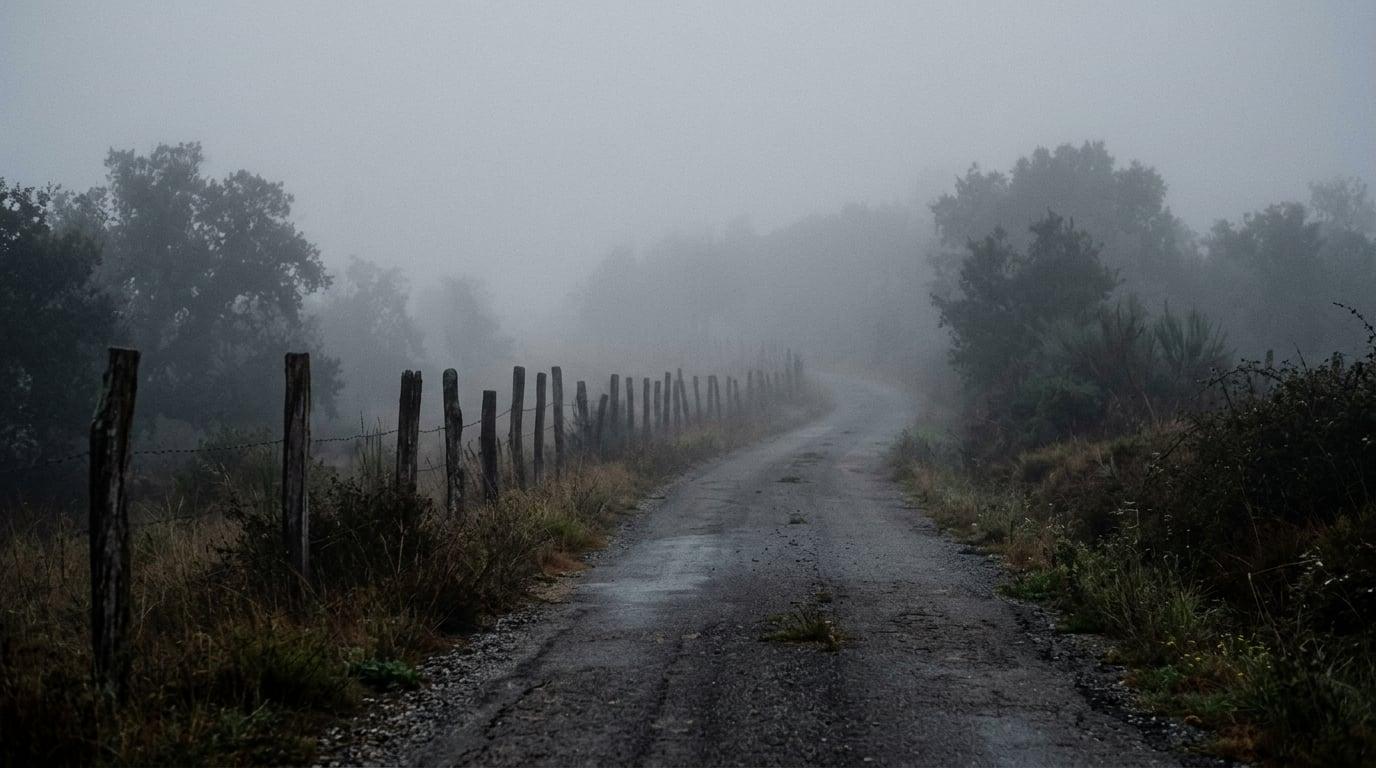
Between Portugal and Spain there were years when moving coffee or tobacco through the Chaves-Verín corridor was a survival response in villages without a cheap alternative. This CTB-002 archive documents that real historical corridor with verifiable sources and connects it with Contrabando's INTENSE coffee profile.
Lote CTB-002
Colección frontera seca
- Estado
- En circulación
- Rareza
- Alta
CTB-002 premia la paciencia: interior, polvo, nervio. Para quien guarda stickers de ruta como quien guarda tickets de concierto.
Ficha de archivo — zonas documentadas
- Pack
- Pack Klandestino
- Perfil de café
- INTENSO + FLORAL
- Zonas citadas
- Chaves (PT) · Verín (ES) · Serra do Larouco
Chaves and Verín: The Tâmega Corridor
Chaves — whose Latin name Aquae Flaviae recalls the thermal waters already exploited by Rome — and Verín are two cities separated by barely twenty kilometres of Ourense hills but divided for centuries by a border that marked differences in price, currency, regime and scarcity. The Tâmega river rises in the hills of Galicia, flows south through Verín and enters Portugal through Chaves before joining the Douro at Régua. That shared river basin was from prehistory a natural communication route between the Iberian north-west and the Atlantic interior.
The Roman Via XX connecting Bracara Augusta (Braga) with Asturica Augusta (Astorga) crossed exactly here: the pass from the Ourense hills into the Portuguese interior was for millennia the most used in the north-western Peninsula. In the nineteenth century, when tariffs between the two countries surged after the Napoleonic wars, that ancient geography facilitated organised smuggling. The terrain — slate, low scrubland and enclosed valleys — offered multiple crossing points where a pack of mules could disappear from sight in minutes.
During Francoism and Portugal's Estado Novo, the Chaves-Verín axis was one of the main inland smuggling passes of the Peninsula. Studies by historian Luís Cunha on smuggling in Trás-os-Montes describe family networks operating on both sides of the border with a degree of organisation that authorities could rarely completely dismantle: when a smuggler was arrested, the goods disappeared and reappeared at another point in the corridor within days.
Trás-os-Montes: Beyond the Mountains
Trás-os-Montes means literally 'beyond the mountains'. The name accurately describes the isolation of this north-eastern Portuguese region, separated from the coast by the Serra de Marão and Alvão ranges and from the Spanish interior by the political frontier. The region was historically one of emigration and subsistence economy: its inhabitants knew that survival depended on local trust networks long before the modern state reached rural administration.
Coffee arrived in Trás-os-Montes mainly from Lisbon and Porto: Brazilian coffee, landing in large quantities at Lisbon port from Santos and Paranaguá, was redistributed inland with margins that made mule and cart transport profitable. In the 1940s and 1950s, when Spain lived under its strictest Francoist rationing, the price difference between a pound of coffee in Chaves and that same pound in Verín could triple. For a Trás-os-Montes shepherd family needing supplementary income, that differential was an opportunity not to be missed.
The smuggling of the dry corridor was artisanal and domestic: families, shepherds and muleteers using knowledge of the terrain to cross at points where dense scrubland or low fog made surveillance difficult. Coffee was transported in small quantities — one or two kilos per person — enough not to raise suspicion but sufficient to make a two-day sierra journey worthwhile. Many families had members on both sides of the border, facilitating deposit and distribution through extended trust networks.
Intense Coffee: Character Born from the Economy of Scarcity
The coffee profile associated with CTB-002 — dark roast, marked body, notes of cocoa, mild tobacco and spiced wood — reflects the consumption tradition of the Iberian inland territories, where concentrated coffee in a small cup was the norm from the time the bean reached rural taverns in the nineteenth century. In areas without easy access to fresh imported coffee, dark roasting preserved the bean during storage and compensated with intensity for what it lost in quality during transport.
A truly intense and well-roasted coffee is not a burnt coffee. The difference is technical and perceptible: controlled dark roasting develops Maillard compounds that contribute notes of dark chocolate, toasted nuts and a persistence in the mouth felt as density, not aggressive bitterness. Burnt roasting destroys aromatic precursors and leaves an ashy aftertaste. For someone who grew up with the midday bar espresso in a Castilian or Portuguese provincial capital, the step to specialty intense coffee is recognisable: the same dark tones, but with a complexity that industrial coffee never offers.
For the Chaves-Verín corridor, where coffee passed as contraband for decades, the INTENSE profile has a practical resonance: the robustness sought in the cup reflects the same needed by smugglers moving at night through the Larouco sierra or the Tâmega valleys, with no certainty of crossing without interception.
Brewing Methods for the CTB-002 Profile
The INTENSE profile of CTB-002 extracts best with methods that favour body and density: classic espresso, Italian moka, AeroPress in concentrated mode or French press. Espresso with eighteen to twenty grams of coffee and an output of thirty-six to forty grams in twenty-five to twenty-eight seconds produces a cup with consistent crema, marked body and restrained but present acidity that distinguishes this profile from industrial coffee.
For filter, the optimal temperature is between 91 and 93 °C — one degree more than for the floral profile — with slightly finer grind and ratio 1:14 or 1:15 (seventeen grams of coffee for 240 grams of water). The result is a filter with more body than a soft Colombian and more evident cocoa notes. If you prefer milk in the cup, the INTENSE profile holds well in a cortado or flat white without losing character: the cocoa notes complement the sweetness of milk rather than disappearing beneath it.
The Klandestino Pack combines the INTENSE and FLORAL profiles from the catalogue: the most honest entry format for someone who does not yet know which profile best fits their taste and usual brewing method.
¿Cómo llegaba el café a esta ruta?
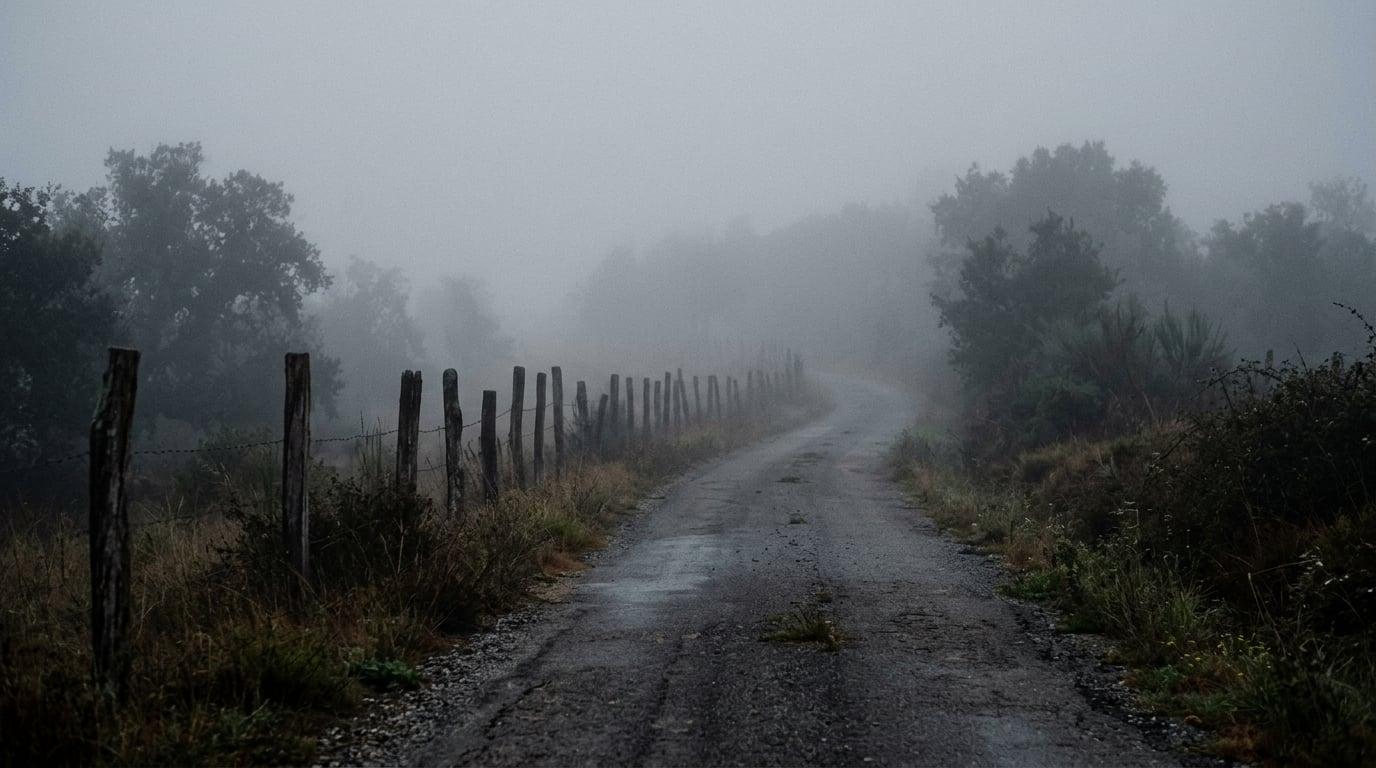
El corredor Chaves-Verín es la conexión más directa entre el interior de Trás-os-Montes y la Galicia orensana. El café que se movía por esta ruta en los años cuarenta y cincuenta procedía principalmente del Brasil: llegaba en grandes partidas al puerto de Lisboa procedente de Santos y Paranaguá, era redistribuido hacia el norte de Portugal por ferrocarril y carretera, y en Chaves encontraba la red de pasadores que lo llevaban al otro lado de la sierra hacia Verín y el mercado español.
La diferencia de precio justificaba el esfuerzo: durante el período más restrictivo del racionamiento español (1940–1952), el café valía en Verín entre dos y tres veces lo que costaba en Chaves. Una familia que transportara dos kilos por viaje obtenía el equivalente a varios días de jornal con un margen que el salario oficial nunca proporcionaba. Las detenciones eran reales pero infrecuentes: el Estado raramente penalizaba con dureza a pasadores de escala doméstica que no representaban competencia para el comercio declarado.
El café que distribuye Contrabando hoy sigue la misma geografía como referencia narrativa, pero en sentido declarado: origen Colombia, tostado Barcelona, distribución directa al comprador. La metáfora del corredor seco sirve para explicar que el café de calidad viaja por redes en las que cada eslabón conoce su responsabilidad, igual que ocurría en los pasos fronterizos del Tâmega hace ochenta años.
Preguntas frecuentes
- ¿Qué historia hay en el corredor Chaves-Verín?
- El corredor Chaves (Portugal) — Verín (España) fue uno de los principales pasos del contrabando interior ibérico durante el franquismo y el Estado Novo. La diferencia de precio del café entre ambos lados —causada por los aranceles españoles— creó un incentivo económico sostenido durante al menos dos décadas. Las redes de pasadores eran arrieros y familias con miembros en ambos lados que operaban con conocimiento del terreno que las autoridades raramente podían desarticular completamente.
- ¿Por qué un café intenso no es lo mismo que un café quemado?
- Un café intenso bien tostado desarrolla compuestos de caramelización que producen notas de cacao negro, frutos secos tostados y madera especiada, con cuerpo marcado y acidez contenida. Un café quemado supera ese umbral y convierte los compuestos aromáticos en carbono, produciendo retrogusto ceniciento y amargo que aplana la taza. El tostado de especialidad controla la curva al segundo para no cruzar esa línea.
- ¿Qué método de preparación es mejor para el perfil CTB-002?
- Espresso clásico y moka italiana son los métodos más adecuados para el perfil INTENSO: la presión concentra el cuerpo sin sobreextraer la acidez. El AeroPress en modo concentrado también funciona bien. Para filtro, usa 91–93 °C y molienda ligeramente más fina que para un floral. El café intenso aguanta bien con leche sin perder carácter.
- ¿Cómo era la economía de Trás-os-Montes en el período del contrabando?
- Trás-os-Montes fue durante la primera mitad del siglo XX una de las regiones más pobres de Portugal: sin industria, sin costa, con agricultura de subsistencia y emigración continua. La escasez estructural hacía que el diferencial de precio entre productos cotidianos a ambos lados de la frontera fuera una oportunidad económica significativa para las familias rurales. El contrabando de café, tabaco y textiles era una forma de economía complementaria integrada en la vida cotidiana de la región.
- ¿Qué diferencia hay entre el Pack Klandestino y el Plan Klandestino?
- El Pack Klandestino es una compra puntual con una selección de cafés CTB-002 (perfil INTENSO y FLORAL). El Plan Klandestino es la suscripción de menor compromiso: una bolsa por ciclo, con reposición automática mensual y cancelación desde la cuenta. Los precios exactos y el contenido de cada formato se detallan en las fichas del catálogo.
Documento audiovisual
Fuentes y memoria
Lecturas y piezas externas que documentan el contexto histórico de esta ruta.